
Por NuzaBy Nuza
«La postura debe ser firme y cómoda.» Patañjali, Yoga Sūtra 2.46 — sthira sukham āsanam (siglos II–IV)
"The posture should be steady and comfortable." Patañjali, Yoga Sūtra 2.46 — sthira sukham āsanam (2nd–4th century CE)
Casi todo el mundo llega a su primera clase de yoga con la misma mezcla: ganas y nervios. Nervios de no ser lo bastante flexible, de no entender las palabras raras, de hacer el ridículo, de ser el único que no sabe. Si te suena, estás en muy buena compañía: a todos nos pasó.
Almost everyone arrives at their first yoga class with the same mix: excitement and nerves. Nervous about not being flexible enough, about not understanding the strange words, about looking silly, about being the only one who doesn't know. If that sounds like you, you're in very good company: it happened to all of us.
La buena noticia es que el yoga no pide nada de eso para empezar. En este artículo vas a encontrar lo básico de la práctica física —la de las posturas, las asanas— para que llegues a tu primera clase con calma y sabiendo qué esperar. No es todo lo que hay que saber del yoga; es lo que necesitas para dar el primer paso sin miedo.
The good news is that yoga asks for none of that to begin. In this article you'll find the basics of the physical practice —the one made of postures, the asanas— so you arrive at your first class calm and knowing what to expect. It isn't everything there is to know about yoga; it's what you need to take the first step without fear.
Qué es realmente una asanaWhat an asana really is
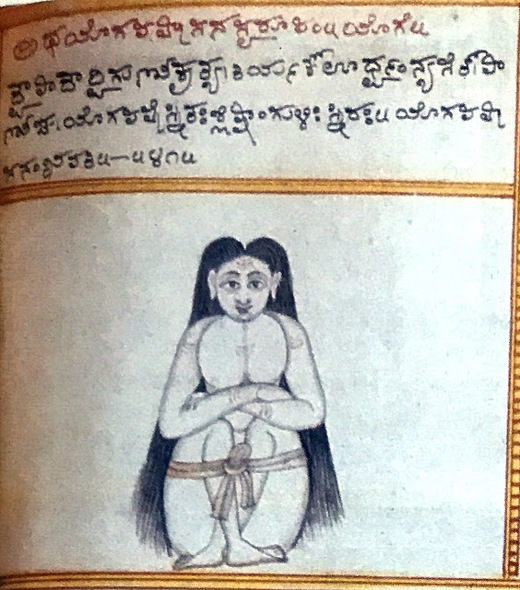
La parte física del yoga son las asanas: las posturas. La palabra, en sánscrito, significa literalmente «asiento» o «postura». Y hace casi dos mil años, el sabio Patañjali la definió en tres palabras que siguen siendo la mejor guía que existe: sthira sukham āsanam — la postura debe ser firme y cómoda a la vez (Patañjali, Yoga Sūtra 2.46; trad. Bryant, 2009).
The physical part of yoga is the asanas: the postures. The word, in Sanskrit, literally means "seat" or "posture." And almost two thousand years ago, the sage Patañjali defined it in three words that are still the best guide there is: sthira sukham āsanam — the posture should be steady and comfortable at once (Patañjali, Yoga Sūtra 2.46; trans. Bryant, 2009).
Fíjate en lo que no dice. No dice difícil. No dice extrema. No dice que tengas que tocarte los pies ni doblarte como un contorsionista. Dice firme —con estabilidad, con presencia— y cómoda —sin pelearte con tu cuerpo—. Ese equilibrio entre esfuerzo y soltura es toda la práctica. Una asana no es una forma que logras; es una relación que encuentras con tu cuerpo en ese momento.
Notice what it does not say. It doesn't say hard. It doesn't say extreme. It doesn't say you have to touch your toes or fold like a contortionist. It says steady —with stability, with presence— and comfortable —without fighting your body—. That balance between effort and ease is the whole practice. An asana isn't a shape you achieve; it's a relationship you find with your body in that moment.
Por eso el yoga no es una competencia ni una exhibición. No hay nota, no hay ganador, no hay nadie midiéndote. La persona de al lado en una postura imposible no lo está «haciendo mejor»: solo está en otro punto de su propio camino.
That's why yoga is neither a competition nor a show. There's no grade, no winner, no one measuring you. The person next to you in an impossible-looking posture isn't "doing it better": they're just at a different point on their own path.
No necesitas ser flexibleYou don't need to be flexible
Es el miedo número uno, y conviene desarmarlo de entrada: la flexibilidad no es un requisito para empezar yoga, es uno de sus resultados. Decir «no puedo hacer yoga porque soy duro» es como decir «no puedo bañarme porque estoy sucio».
It's the number one fear, and it's worth dismantling right away: flexibility isn't a requirement for starting yoga, it's one of its results. Saying "I can't do yoga because I'm stiff" is like saying "I can't take a shower because I'm dirty."
Y está comprobado: en un estudio, un grupo de personas que practicó yoga dos veces por semana durante diez semanas mejoró de forma significativa su flexibilidad y su equilibrio, comparado con un grupo que no lo hizo (Polsgrove et al., 2016). Empezaron donde estaban —rígidos, como casi todos— y el cuerpo respondió. Tú vas a empezar exactamente donde estás hoy, y eso es justo el lugar correcto.
And it's been shown: in one study, a group of people who practiced yoga twice a week for ten weeks significantly improved their flexibility and balance, compared with a group that didn't (Polsgrove et al., 2016). They began where they were —stiff, like almost everyone— and the body responded. You're going to begin exactly where you are today, and that's precisely the right place.
Lo que de verdad importa: la respiraciónWhat really matters: the breath
Si te quedas con una sola cosa de este artículo, que sea esta: en el yoga, la respiración manda. No las posturas. La señal de que estás practicando bien no es lo lejos que llegas, sino si puedes seguir respirando con calma mientras lo haces.
If you take only one thing from this article, let it be this: in yoga, the breath is in charge. Not the postures. The sign that you're practicing well isn't how far you get, but whether you can keep breathing calmly while you do it.
Mientras tu respiración sea lenta y pareja, estás en tu lugar. En el momento en que se corta, se acelera o la aguantas sin darte cuenta, tu cuerpo te está avisando que te pasaste — y toca aflojar. La respiración es tu tablero de instrumentos, y además es tu ancla: cada vez que la mente se vaya a la lista del súper, vuelves al aire que entra y sale. (Si quieres entender por qué la respiración tiene ese poder sobre el cuerpo y la mente, lo contamos a fondo en este artículo.)
As long as your breath is slow and even, you're in your place. The moment it catches, speeds up, or you hold it without noticing, your body is letting you know you've gone too far — and it's time to ease off. The breath is your dashboard, and it's also your anchor: every time the mind wanders off to the grocery list, you come back to the air going in and out. (If you want to understand why the breath has that power over body and mind, we tell the whole story in this article.)
Tu borde: esfuerzo sin dolorYour edge: effort without pain
Aquí está la herramienta más importante para practicar seguro. En cada postura hay un punto que llamamos el borde: ese lugar donde sientes el trabajo o el estiramiento, donde el cuerpo está despierto, pero todavía puedes respirar y sostenerte. Ese es el sitio. Firme y cómodo, otra vez.
Here's the most important tool for practicing safely. In every posture there's a point we call the edge: that place where you feel the work or the stretch, where the body is awake, but you can still breathe and hold yourself there. That's the spot. Steady and comfortable, again.
La regla práctica: la sensación de estiramiento o esfuerzo está bien; el dolor agudo, punzante o eléctrico, nunca. Uno es información; el otro es una alarma. Si algo duele de esa forma filosa, sal de la postura. No estás «aguantando como los demás»: estás escuchando, que es exactamente lo que se entrena.
The practical rule: the sensation of stretch or effort is fine; sharp, stabbing, or electric pain, never. One is information; the other is an alarm. If something hurts in that sharp way, come out of the posture. You're not "toughing it out like everyone else": you're listening, which is exactly what's being trained.
Es más seguro de lo que creesIt's safer than you think
Cuando respetas ese borde, el yoga es notablemente seguro. La revisión más grande que existe sobre el tema juntó 94 ensayos clínicos con más de 8,400 personas y no encontró más lesiones ni efectos adversos en quienes hacían yoga que en quienes hacían otro ejercicio o ninguno (Cramer et al., 2015). Las pocas lesiones que ocurren casi siempre vienen de lo mismo: empujar de más, competir, forzar una postura para la que el cuerpo aún no está. Es decir, de saltarse justo la regla del borde.
When you respect that edge, yoga is remarkably safe. The largest review on the subject pulled together 94 clinical trials with more than 8,400 people and found no more injuries or adverse effects among those who did yoga than among those who did other exercise or none (Cramer et al., 2015). The few injuries that do happen almost always come from the same thing: pushing too hard, competing, forcing a posture the body isn't ready for yet. In other words, from skipping the rule of the edge.
De ahí salen las dos únicas reglas de oro de seguridad para tu primera clase: avísale a quien guía si tienes una lesión, una operación reciente, presión alta o estás embarazada —siempre hay variantes para ti—; y nunca fuerces. Ninguna postura vale una lesión.
From that come the only two golden safety rules for your first class: tell whoever is guiding if you have an injury, a recent surgery, high blood pressure, or you're pregnant —there are always variations for you—; and never force. No posture is worth an injury.
Por qué vale la penaWhy it's worth it
Más allá de cómo te haga sentir —que esa es la prueba que de verdad importa—, lo que el yoga le hace al cuerpo está bien documentado. Un estudio encontró que, para el dolor de espalda baja crónico, un programa de yoga fue tan eficaz como la fisioterapia para reducir el dolor y mejorar la función (Saper et al., 2017). Mejora la flexibilidad y el equilibrio, como ya vimos (Polsgrove et al., 2016). Y a través de la respiración, baja la activación del estrés. Es, sencillamente, un cuerpo que se mueve, se estira y se calma.
Beyond how it makes you feel —which is the test that really matters—, what yoga does to the body is well documented. One study found that, for chronic low back pain, a yoga program was as effective as physical therapy at reducing pain and improving function (Saper et al., 2017). It improves flexibility and balance, as we already saw (Polsgrove et al., 2016). And through the breath, it lowers the body's stress response. It is, quite simply, a body that moves, stretches, and calms down.
Lo práctico: antes de llegarThe practical part: before you arrive
Para que llegues sin estrésSo you arrive without stress
- Llega 10–15 minutos antes. Te da tiempo de registrarte, encontrar tu lugar y respirar antes de empezar. Llegar corriendo arruina la mitad del punto.Arrive 10–15 minutes early. It gives you time to check in, find your spot, and breathe before you begin. Rushing in ruins half the point.
- Ven con el estómago ligero. Lo ideal es no haber comido fuerte en las 2–3 horas previas; muchas posturas comprimen el abdomen y se siente mejor sin una comida pesada encima.Come with a light stomach. Ideally you haven't eaten a big meal in the 2–3 hours before; many postures compress the abdomen and it feels better without a heavy meal on top.
- Ropa cómoda que estire. Nada que te apriete o se te suba. No necesitas ropa especial: unos leggings o shorts y una playera que no se vaya volando al agacharte.Comfortable clothes that stretch. Nothing that's too tight or rides up. You don't need special clothes: some leggings or shorts and a top that won't fly up when you bend over.
- Se practica descalzo. Los pies desnudos agarran mejor el tapete y son parte de la práctica.You practice barefoot. Bare feet grip the mat better and are part of the practice.
- Trae tu propio tapete. Es lo mejor para practicar; si todavía no tienes, en el estudio hay tapetes en venta y en renta. Y si eres de los que sudan mucho, una toalla pequeña ayuda.Bring your own mat. It's the best thing for practice; if you don't have one yet, the studio has mats for sale and to rent. And if you're someone who sweats a lot, a small towel helps.
- Avisa de cualquier condición. Lesiones, cirugías, embarazo, presión alta: dilo al inicio. Quien guía te dará variantes.Mention any condition. Injuries, surgeries, pregnancy, high blood pressure: say so at the start. Whoever guides will give you variations.
- Pon el celular en silencio. No hace falta apagarlo, solo silenciarlo: este tiempo es para ti.Put your phone on silent. You don't have to turn it off, just silence it: this time is for you.
Durante la claseDuring the class
Cómo vivirla sin agobioHow to experience it without overwhelm
- Ve a tu ritmo. No tienes que hacer cada cosa ni llegar tan lejos como nadie. Haz tu versión.Go at your own pace. You don't have to do every single thing or go as far as anyone else. Do your version.
- La postura del niño es tu refugio. En cualquier momento puedes arrodillarte y descansar en ella (rodillas dobladas, frente al suelo, brazos relajados). No es rendirse: es práctica inteligente. Vuelve cuando quieras.Child's pose is your refuge. At any moment you can kneel and rest in it (knees bent, forehead to the floor, arms relaxed). It's not giving up: it's smart practice. Come back whenever you want.
- No te compares ni mires alrededor. La práctica pasa dentro de ti, no en el espejo del vecino.Don't compare yourself or look around. The practice happens inside you, not in your neighbor's mirror.
- Las variantes no son la versión «menor». Usar un bloque, doblar las rodillas o quedarte en una opción más suave es practicar bien, no practicar menos.Variations aren't the "lesser" version. Using a block, bending your knees, or staying with a gentler option is practicing well, not practicing less.
- Respira. Si te das cuenta de que aguantas el aire, ya sabes: afloja hasta que la respiración vuelva.Breathe. If you notice you're holding your breath, you know what to do: ease off until the breath comes back.
- No entender el sánscrito está perfecto. Nadie nace sabiéndolo. Mira, copia, y con el tiempo los nombres se acomodan solos.Not understanding the Sanskrit is perfectly fine. No one is born knowing it. Watch, copy, and over time the names settle in on their own.
- No te saltes el final. La clase casi siempre cierra con savasana, unos minutos de quietud boca arriba. Parece que «no es nada» y es de lo más importante (te contamos por qué aquí).Don't skip the ending. The class almost always closes with savasana, a few minutes of stillness lying on your back. It seems like "nothing" and it's one of the most important parts (we tell you why here).
DespuésAfterward
Toma agua, y no te asustes si al día siguiente sientes músculos que no sabías que tenías: es normal al empezar y se va. Y lo más importante de todo: el yoga no se trata de una clase perfecta, sino de volver. La constancia, aunque sea suave, le gana siempre a la intensidad de un solo día. Una vez por semana, sostenida, ya cambia cosas.
Drink water, and don't be alarmed if the next day you feel muscles you didn't know you had: it's normal at the start and it passes. And most important of all: yoga isn't about a perfect class, it's about coming back. Consistency, even gentle, always beats the intensity of a single day. Once a week, sustained, already changes things.
Vas a llegar a tu primera clase sin saber muchas cosas, y está perfecto: justo a eso vas. No necesitas ser flexible, ni fuerte, ni saber nada todavía. Solo necesitas tu cuerpo, tu respiración y la disposición de empezar donde estás. Lo demás —firme y cómodo— se aprende sobre el tapete.
You'll arrive at your first class not knowing many things, and that's perfect: that's exactly what you're there for. You don't need to be flexible, or strong, or know anything yet. You only need your body, your breath, and the willingness to begin where you are. The rest —steady and comfortable— is learned on the mat.
ReferenciasReferences
- Saper, R. B. et al. (2017). Yoga, physical therapy, or education for chronic low back pain: a randomized noninferiority trial. Annals of Internal Medicine, 167(2), 85–94. (Boston University School of Medicine / Harvard Medical School.) doi:10.7326/M16-2579
- Cramer, H. et al. (2015). The safety of yoga: a systematic review and meta-analysis of randomized controlled trials. American Journal of Epidemiology, 182(4), 281–293. (94 ensayos, 8,430 participantes.)(94 trials, 8,430 participants.) PMID 26116216
- Polsgrove, M. J., Eggleston, B. M. y Lockyer, R. J. (2016). Impact of 10-weeks of yoga practice on flexibility and balance of college athletes. International Journal of Yoga, 9(1), 27–34. PMID 26865768
- Bryant, E. F. (2009). The Yoga Sūtras of Patañjali: A New Edition, Translation, and Commentary. North Point Press. (Sūtra 2.46, sthira sukham āsanam.)
- National Center for Complementary and Integrative Health (NCCIH), National Institutes of Health. Yoga: What You Need to Know. (Orientación general de seguridad para principiantes.)(General safety guidance for beginners.)